
Understanding T-Score, Z-Score, & TBS in Bone Density Scans
Quick Answer:
Your bone density report can include three important measurements: T-score, Z-score, and TBS. Your T-score tells you how your bone density compares to a healthy 30-year-old of the same sex, while your Z-score compares it with people your own age and sex. TBS, or trabecular bone score, looks at the texture of the bone image from your DEXA scan to provide information about the internal structure of your bones. Together, these measurements give you and your physician more information about your bone health. At LSG Imaging, we include TBS with every bone density scan at our Beverly Hills and Santa Monica locations.
What Is a T-Score, and What Do the Numbers Mean?
Your T-score shows how your bone mineral density compares with that of a healthy 30-year-old of the same sex. You will see that the result appears as a number measured in standard deviations (SD).
If you are a postmenopausal woman or a male aged 50 and older, physicians will use the T-score to classify your bone density and help diagnose osteoporosis.
Your T-score falls into one of three standard categories:
- -1.0 SD or above: Normal bone density
- Between -1.0 and -2.4 SD: Osteopenia, or low bone mass
- -2.5 SD or below: Osteoporosis
A lower T-score means your bone density falls farther below the young adult reference point. A physician assessing your T-score will do so alongside other information, including your age, medical history, fracture history, medications, and other risk factors.
While your physician will gauge your bone density from your T-score, it does not show every aspect of your bone health. That is why your complete bone density results must ideally include other measurements, including TBS.
What Is TBS, and Why Does It Matter?
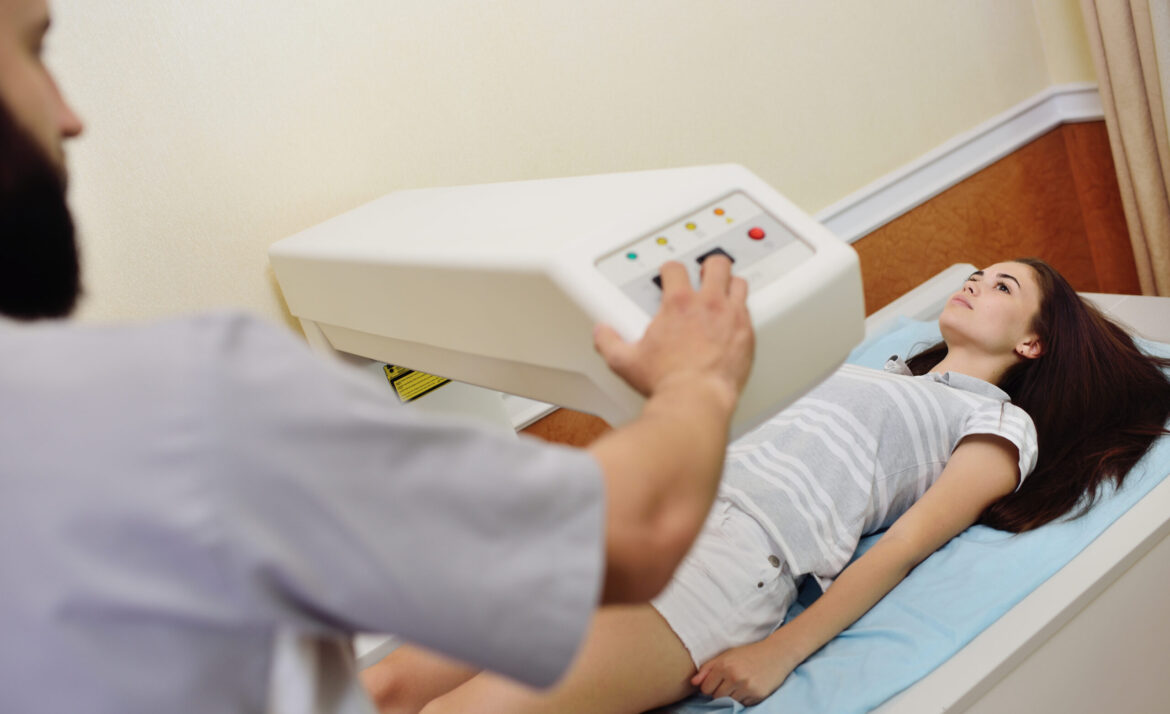
TBS looks at something different from your bone density measurement. While your bone mineral density shows how much mineral your bones contain, TBS analyzes the texture of the bone image captured during your DEXA scan.
This provides information about the internal structure of your bones, also called bone microarchitecture. What is interesting is that two people can have similar bone density measurements but different internal bone structures. TBS can help your physician identify those differences.
Looking at your T-score may seem reassuring at first glance, but it’s still possible that your bone quality has deteriorated. TBS can help identify this and give your physician another piece of information when evaluating your overall bone health and fracture risk.
NOTE: TBS does not replace your T-score, Z-score, or your physician’s clinical assessment. It adds information that bone density alone cannot provide.
At LSG Imaging, we include TBS with every bone density scan at our Beverly Hills and Santa Monica locations. You do not need a separate visit or additional scan to receive your TBS measurement.
What Is a Z-Score, and Who Is It For?
Your Z-score answers another important question – where you stand with your peers. Instead of comparing your bone density with a young adult reference population, your Z-score puts your bone density in context by comparing it with people of the same age and sex. This makes the Z-score useful for patients who do not fall into the group where physicians use T-scores to diagnose osteoporosis.
Physicians primarily use Z-scores for:
- Premenopausal women
- Men younger than 50
- Children and adolescents
A Z-score of -2.0 or lower falls below the expected range for your age. What happens next if you have a low Z-score? Your physician may investigate factors that could contribute to low bone density, such as certain medications or underlying medical conditions.
Your Z-score can help your physician determine whether your bone density falls within the expected range for someone your age rather than comparing you with a much younger reference population.
How LSG Imaging in Beverly Hills & Santa Monica Reports Your Bone Density Scan Results
At LSG Imaging, your bone density report includes the measurements that apply to your clinical situation, including your T-score, Z-score, and TBS.
A board-certified radiologist reviews your scan and provides the findings to your referring physician. You receive your results promptly, allowing you and your physician to discuss what they indicate in order to determine the appropriate next steps.
LSG Imaging offers bone density scanning with TBS in Beverly Hills and Santa Monica, giving you access to comprehensive bone health information at both our locations.
If you want more information about bone density screening, eligibility, or how often you may need a scan, visit our bone density scan FAQ. You can also learn more about osteoporosis risk factors and early warning signs in our guide to the early signs of osteoporosis.
Schedule Your Bone Density Scan with TBS in Beverly Hills or Santa Monica
Your bone density results can tell you more than one number. LSG Imaging includes TBS with every bone density scan so your physician can evaluate bone density alongside information about your internal bone structure.
The exam takes about 10 minutes and requires no fasting or special preparation. You can get your bone density scan with TBS at our Beverly Hills or Santa Monica location.
Ready to schedule your bone density scan? Call LSG Imaging at (310) 859-8104 for our Beverly Hills location or (310) 394-2761 for our Santa Monica location.
Frequently Asked Questions
What is a good T-score for bone density?
A T-score of -1.0 SD or higher falls within the normal range. A T-score between -1.0 and -2.4 SD indicates osteopenia, while a T-score of -2.5 SD or lower indicates osteoporosis for the appropriate patient populations. Your physician will interpret your T-score alongside your other health information.
What is the difference between a T-score and a Z-score?
Your T-score compares your bone density with that of a healthy 30-year-old and helps classify bone density in postmenopausal women and men age 50 and older. Your Z-score compares your bone density with that of people your own age and sex and is primarily used for premenopausal women, men under 50, and children.
What does TBS mean on a bone density report?
TBS stands for trabecular bone score. It analyzes the texture of your DEXA image to provide information about the internal structure of your bones. TBS adds information to your bone density results but does not replace your T-score, Z-score, or your physician’s overall assessment.
Does every bone density scan include a TBS measurement?
No. Not every imaging center includes TBS with a bone density scan. LSG Imaging includes TBS with every bone density scan at our Beverly Hills and Santa Monica locations. You receive the TBS measurement during the same exam without a separate visit or additional preparation.
