
Virtual Colonoscopy vs Cologuard: Which Screening Is Best?

Quick Answer:
The convenience of Cologuard’s at-home test comes with a catch: it only detects DNA markers, so a positive result always means a follow-up traditional colonoscopy anyway. Virtual colonoscopy skips that detour entirely, directly imaging the colon with no sedation, and only about 5% of patients ever need a follow-up procedure. LSG Imaging offers virtual colonoscopy at its Beverly Hills and Santa Monica locations for patients weighing convenience against a real look inside.
Like many people, you may recognize the name Cologuard from TV ads, physician recommendations, or online research for an easier screening option that avoids sedation, scopes, or a traditional colonoscopy. If you are trying to find out more about scheduling a colonoscopy in Beverly Hills or Santa Monica, CA, or seeking alternatives to a colonoscopy, you may be comparing different screening options to decide what feels right for you. It’s important to be aware that Cologuard is not the only alternative to a traditional procedure. Virtual colonoscopy, also called CT colonography, offers a different method, and for many patients, it is the stronger fit.
Why Colorectal Cancer Screening Guidelines Matter in 2026
Finding colorectal cancer early matters, because it generally leads to more effective and less aggressive treatments; and screening can identify precancerous changes before they develop into cancer. Cologuard’s popularity comes from convenience, but not many patients understand the full range of screening options. Updated 2026 American Cancer Society guidance adds attention to blood-based testing while reaffirming that established screening methods remain the standard.
What is Cologuard and How Reliable Is It for Colon Cancer Screening?
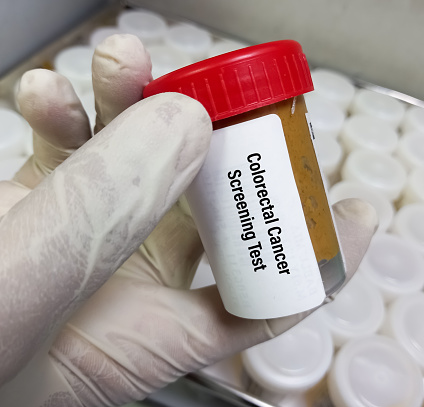
Cologuard is an at-home stool-based screening test that checks for DNA markers and blood that may indicate colorectal cancer or advanced precancerous changes. For average-risk adults, it is generally recommended every three years. The important thing is that Cologuard is a screening test, not an examination of your colon. If your screening shows positive results, you would typically require a traditional colonoscopy to complete the evaluation and remove or biopsy any suspicious lesions. It must be kept in mind that Cologuard has been found to be a screening test with many false positive and false negative results. This may lead to many unnecessary colonoscopy exams.
Virtual Colonoscopy in Beverly Hills & Santa Monica, CA: CT Colonography Explained
Virtual colonoscopy, also called CT colonography, is an imaging-based exam that uses CT technology to create detailed images of the colon. Unlike traditional colonoscopy, it does not require a colonoscope or sedation. A CT scanner captures high-resolution images after the colon is gently expanded for visibility. For average-risk screening, it is generally recommended every five years. If abnormalities are detected, physicians typically recommend a follow-up colonoscopy for confirmation or treatment. Virtual colonoscopy in Beverly Hills or Santa Monica, CA provides a direct structural view of the colon that stool-based or blood-based tests cannot offer.
Cologuard vs. Virtual Colonoscopy in Beverly Hills, CA: Key Differences
Cologuard analyzes a stool sample for biological markers linked to cancer risk. Virtual colonoscopy uses CT imaging to evaluate the physical structure of the colon.
|
Cologuard |
Virtual Colonoscopy (CT Colonography) |
|
|
Type of test |
Stool-based lab analysis |
CT imaging exam |
|
Screening interval |
Every 3 years |
Every 5 years |
|
Visualizes the colon |
No |
Yes |
|
Sedation required |
No |
No |
|
Positive result follow-up |
Traditional colonoscopy |
Traditional colonoscopy (if findings warrant) |
While you may consider choosing Cologuard for the convenience, keep in mind that a virtual colonoscopy provides a more detailed, imaging-based assessment, and you don’t need sedation or the insertion of any invasive colonoscope.
Blood-Based Colon Cancer Tests: Why They Are Not a Preferred Option
The 2026 ACS update introduced blood-based screening tests that detect tumor DNA through a standard blood draw. However, these tests are not considered a preferred screening option. They are recommended only for patients who decline or do not complete established methods such as colonoscopy, stool-based testing, or CT colonography. Research shows blood-based tests are less effective at detecting advanced precancerous lesions and early-stage cancers compared to other screening methods. Take the time to review all your options with your physician before deciding on a screening approach.
How Often Are These Screening Options Recommended?
For average-risk adults, general screening intervals may include:
- Cologuard / multitarget stool DNA testing: every 3 years
- Virtual colonoscopy / CT colonography: every 5 years
- Traditional colonoscopy: every 10 years when used as a screening test
- Blood-based screening: recommended only when preferred options are declined or not completed
These intervals may change depending on personal risk factors, symptoms, prior findings, or physician recommendations.
What Happens if a Result is Positive?
A positive result from Cologuard or a blood-based screening test does not confirm cancer, but it does require further evaluation. It must be kept in mind that there are many false positives and false negatives with Cologuard. In most cases, physicians recommend a traditional colonoscopy to directly examine the colon and remove or biopsy any abnormal areas, if they are found. If virtual colonoscopy identifies a concerning lesion or polyp, a follow-up colonoscopy is typically recommended for confirmation and treatment. This will happen only approximately 5% of the time after a virtual colonoscopy. Unlike traditional colonoscopy, these screening tests do not allow immediate biopsy or polyp removal.
Which Colon Screening Option Should You Discuss with Your Doctor?
There is no single best screening test for every patient. The right choice for you depends on your medical history, risk level, and screening goals. A patient who prefers an at-home approach may consider Cologuard. A patient who wants an imaging-based exam without sedation may be better suited for virtual colonoscopy. Patients with symptoms, family history, or higher risk factors may require traditional colonoscopy or a different diagnostic approach entirely. The most important factor is completing screening on schedule using the method most appropriate for your clinical needs.
Contact LSG Imaging for a Virtual Colonoscopy in Beverly Hills and Santa Monica, CA
LSG Imaging offers virtual colonoscopy for patients referred for imaging-based colon screening in Beverly Hills and Santa Monica, using advanced CT technology and a fast, comfortable appointment process. Talk with your physician about your age, risk level, symptoms, and medical history before choosing a screening test.
Ready to take the next step? If you are considering a colonoscopy in Beverly Hills or Santa Monica, CA, or exploring imaging-based alternatives, contact us today to determine whether virtual colonoscopy may be an appropriate screening choice for you.
Frequently Asked Questions
Is Cologuard the same as virtual colonoscopy?
No. Cologuard is a stool-based test, while virtual colonoscopy uses CT imaging to visualize the colon.
How often is Cologuard recommended?
Every three years for average-risk adults.
How often is virtual colonoscopy recommended?
Every five years for average-risk adults.
Are blood-based colon cancer screening tests preferred?
No. Current guidelines recommend them only when preferred screening options are declined or not completed.
Does a positive Cologuard test require a colonoscopy?
Yes. A traditional colonoscopy is usually required for follow-up evaluation.
How do I schedule a virtual colonoscopy in Beverly Hills, CA?
LSG Imaging accepts physician referrals for virtual colonoscopy in Beverly Hills and Santa Monica, CA.
Why consider virtual colonoscopy if Cologuard is available?
Virtual colonoscopy provides direct imaging of the colon, allowing physicians to look for polyps or structural abnormalities rather than relying only on stool-based markers. For patients who want more anatomical detail without sedation, it may be worth discussing with a doctor.
Additional Ref. Sources:
- https://www.cancer.org/health-care-professionals/american-cancer-society-prevention-early-detection-guidelines/colorectal-cancer-screening-guidelines.html
- https://www.cancer.org/cancer/types/colon-rectal-cancer/detection-diagnosis-staging/acs-recommendations.html
- https://acsjournals.onlinelibrary.wiley.com/doi/10.3322/caac.70087
- https://www.aha.org/news/headline/2026-05-27-american-cancer-society-updates-colorectal-cancer-screening-guidelines-adds-blood-test-option
- https://www.cologuard.com/
- https://www.healthline.com/health-news/new-colorectal-cancer-screening-guidelines-acs-blood-stool-testing
